Address:451, Khosla Hospital, Near Char Khamba Chowk, Model Town, Ludhiana-141002
Advanced Laser Treatment
Painless RIRS (Retrograde Intrarenal Surgery)
Flexible Ureteroscopy (RIRS) – Advanced stone Treatment with Holmium Laser
Kidney Stone Surgery in Ludhiana, Punjab
Kidney stone treatment in Ludhiana, Punjab
Kidney stone treatment in Ludhiana, Punjab, Painless RIRS (Retrograde Intrarenal Surgery): The kidney stone and the renal stone prevalence rate is increasing quickly. The renal stones are concentrated mineral deposits present in the urinary tract. The problem requires immediate assistance because it can trigger symptoms like pain, malaise, and discomfort. The problem can even lead to problems urinating and leaving a burning sensation. If your condition worsens with time, then schedule your initial consultation with urologist in Ludhiana, Punjab, to understand whether your state requires Retrograde Intrarenal Surgery.
What are the factors that cause renal stones?
There are several factors for the problem to reach the stage that you have a problem urinating and have a burning sensation. Some of the common reasons are:
Improper and unhealthy diet
Existing medical condition
Intake of certain medications
Excess body weight
How is RIRS surgery performed?
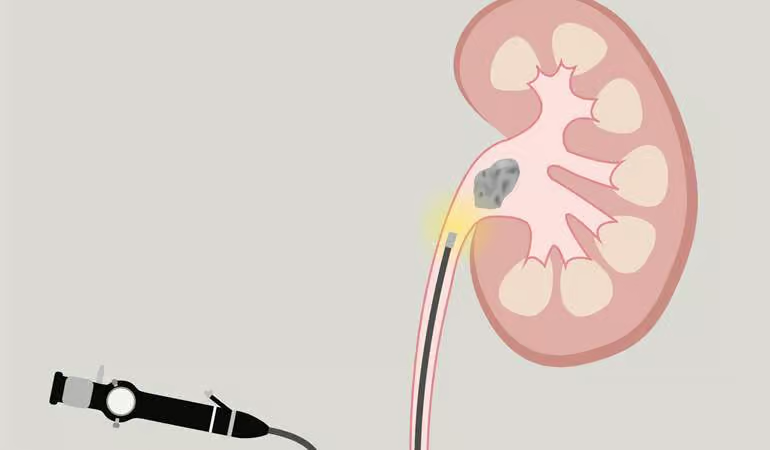
The RIRS surgery in Punjab happens by using a Fiberoptic endoscope tube. During the surgery, it goes to kidneys to rectify the issue. The flexible ureteroscope treatment in Ludhiana allows the endoscope to reach the kidney and ureter.
The tube moves from the ureter to other parts to check them properly. The surgeon performs the treatment at our hospital through the advanced Holmium Laser that breaks down the stone into small particles and lets it wash out freely. The procedure allows the effective removal of stones.
The treatment does not require any incision and involves minimal discomfort. The doctor can ask you to get it done with local or general anesthesia depending on the condition. At Khosla Kidney Stone Surgical Centre, the Best Doctor for RIRS will give you the most reliable and precise care for your renal stone.
What happens during RIRS Surgery?
When you plan for your flexible ureteroscopy surgery in Punjab, the doctor will guide you in detail as to what will happen. Here’s what happens:
Visit the hospital for regular check-ups to make sure your health is okay
If required, the doctor will tell you to get DJ Stent. You need to get it at least 14 days before surgery.
The RIRS surgery takes around 30-40 mins
The doctor suggests RIRS to patients with kidney stones at least 1.5cm in diameter.
Make sure to get proper bed rest after the surgery
You need to keep yourself hydrated after the surgery
Take the prescribed medications from time to time
You have to visit the hospital at least seven days after the surgery.
Please Note!
If you notice any problems or unwanted symptoms after the surgery, inform the doctor. And if your condition does seem to improve, then visit the doctor right away.
Who can benefit from RIRS?
The RIRS is performed with Holmium Laser at our hospital, making it a minimally invasive surgery. Being an advanced and result-oriented treatment, the RIRS can benefit the patients who have conditions like:
Failed attempts at treatment
Bleeding disorders in the kidneys
Grossly obese patients
Kidney stones too large for treatment by lithotripsy
Strictures in the kidney
Tumors in the kidney
Kidney stones diagnosed in children
Once the doctor evaluates your condition, you will know better how to manage your condition with this inventive method.
Benefits of RIRS with Holmium Laser
RIRS is advanced stone treatment performed in Punjab under the expertise of a urologist. Here are some of the major advantages of RIRS in the present time:
The procedure is minimally invasive (No need for any cut or incision)
Simple surgical procedure
Reduce complication rate
No bleeding as there’s no incision
Allows treatment for both sides at once
Both children and adults are a suitable candidates for the surgery
The procedure is painless as the patient is administered anesthesia: General or Local
Reduce the need for a hospital stay
Provide effective results
Cost Of RIRS Kidney stone treatment in Punjab
You will know the actual amount only after consulting the urologist. Our urologist will analyze all the possible factors and accordingly tell you the amount you have to pay for the treatment. Some of the factors that affect the cost factor are:
Doctors expertise
Clinic location
Type of technology used
Severity of condition
So, make sure that you never compare the cost factor with other patients as no two patients have a similar condition.
Are you looking for kidney or renal stone treatment in Punjab?
Schedule your initial consultation at Khosla Kidney Stone & Surgical Centre to analyze the extent of the condition. Dr. Rajesh Khosla will perform the necessary diagnosis and evaluate the problem. Depending on the test results, you will get a treatment plan.
Frequently Asked Questions
Renal stones are small, pebble-like mineral deposits that form in the kidneys or urinary tract when urine becomes highly concentrated with substances such as calcium, oxalate, or uric acid.
Renal stones can develop gradually over months or years. In some cases, they may form within weeks, depending on factors such as the type of stone, hydration, and levels of dietary minerals like calcium, sodium, and oxalate.
A medical examination and appropriate diagnostic tests are required to confirm renal stones. Common symptoms may include blood in the urine, a frequent urge to urinate, severe cramping pain around the side or below the ribs, nausea or vomiting, and fever.
Apart from Retrograde Intrarenal Surgery (RIRS), treatment options may include ureteroscopic lithotripsy, percutaneous nephrolithotomy (PCNL), and extracorporeal shock wave lithotripsy (ESWL). The appropriate treatment depends on the size, location, and characteristics of the stone.
RIRS may be considered when other treatments are not suitable or when stones are located in areas that are difficult to reach with other techniques. It can be used for appropriately sized kidney stones, including cases where shock wave lithotripsy may not be suitable. The treatment choice depends on the patient's individual condition.
Initial recovery after RIRS may begin within a few days, with discomfort generally improving over time. Many patients can return to their normal activities within 1 to 2 weeks, depending on the procedure and individual recovery.
After RIRS surgery, patients are generally advised to stay well hydrated, take prescribed medications as directed, manage discomfort appropriately, avoid heavy lifting for the recommended period, and follow a suitable diet. Follow-up appointments may also be required.
RIRS is considered a minimally invasive procedure. A flexible endoscope is passed through the natural urinary tract to reach the kidney, so the procedure does not require an external surgical incision.
RIRS is a minimally invasive procedure that can offer benefits such as reduced external tissue damage, minimal bleeding, and relatively quick recovery. It allows kidney stones to be treated using a flexible scope and laser technology.
The cost of RIRS surgery in Punjab varies depending on factors such as the size and location of the stone, complexity of the case, hospital, surgeon's expertise, and other treatment requirements. The approximate cost may range from ₹70,000 to ₹2,50,000, but the actual cost should be confirmed with the hospital after evaluation.
Staying well hydrated is one of the important ways to reduce the risk of kidney stone formation. Limiting excessive sodium intake and following a balanced diet can also help. Depending on the type of stone, your doctor may recommend specific dietary changes.
Untreated kidney stones can sometimes cause urinary obstruction, persistent pain, recurrent infections, and damage to the urinary system. In severe or prolonged cases, complications can affect kidney function. Medical evaluation is recommended when symptoms occur.
RIRS is performed under anaesthesia using a flexible scope that is passed through the urethra and bladder and then into the kidney through the natural urinary tract. A laser is used to break the stones into smaller fragments or dust, which can then be removed or passed naturally.
Renal stones form when minerals and salts in concentrated urine crystallise and gradually accumulate into solid deposits. Common stone-forming substances include calcium, oxalate, and uric acid.
RIRS is performed under anaesthesia, so patients generally do not feel pain during the procedure. Some temporary discomfort, burning during urination, blood in the urine, or flank discomfort may occur after surgery as part of the recovery process.
Kidney stones can develop due to several factors, including family history, inadequate fluid intake, high salt or animal-protein consumption, certain dietary patterns, obesity, diabetes, and some medical conditions or medications. The underlying cause varies from person to person and may require medical evaluation.
RIRS is commonly used for kidney stones smaller than 20 mm (2 cm). In selected cases, it may also be considered for larger stones, depending on their location, hardness, number, and the patient's kidney anatomy.
Temporary side effects after RIRS may include pink or red urine, mild discomfort during urination, urinary frequency, or flank pain. These symptoms often improve during recovery, but persistent or severe symptoms should be discussed with a doctor.
Post-operative care may include drinking adequate fluids, taking prescribed medications, avoiding heavy physical activity or lifting for the recommended period, and attending follow-up appointments. Temporary burning during urination or blood in the urine can occur during recovery.
At Khosla Kidney Stone & Surgical Centre in Ludhiana, advanced Holmium Laser technology and expert urological care ensure precise stone fragmentation, minimal recovery times, and individualized patient attention for optimal stone-free results.