Skip to content
Specialized Urological Surgery

Transurethral Resection of the Prostate (TURP) Surgery in Ludhiana, Punjab

Advanced, incisionless TransUrethral (TUR) Surgery for prostate enlargement and bladder tumors, providing safe symptom relief under expert surgical care.

Book Consultation
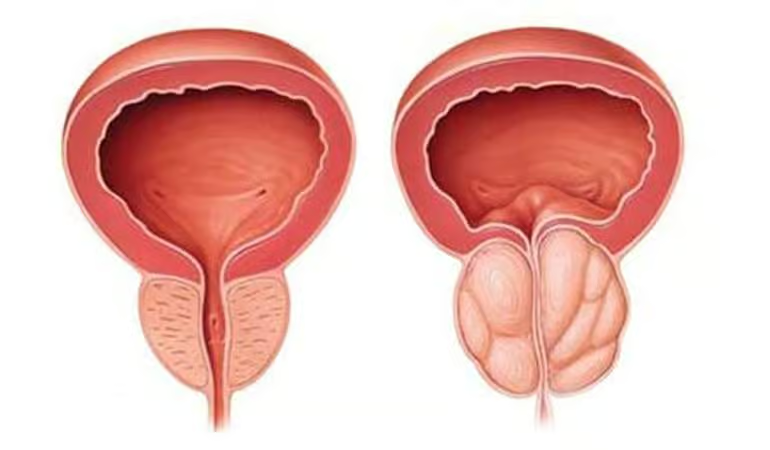
Transurethral Surgery Illustration

Overview of Transurethral Procedures

TransUrethral (TUR) Surgery is an advanced surgical approach used for both Benign Prostatic Hyperplasia (BPH) and bladder tumor removal. The procedure requires no external skin incisions, inserting specialized instruments directly through the urethra to alleviate severe urinary obstruction.

At Khosla Kidney Stone & Surgical Centre, Dr. Rajesh Khosla personalizes each treatment plan based on the severity of symptoms, prostate size, and overall health to deliver optimal recovery outcomes.

Khosla Kidney Stone & Surgical Centre

Led by Dr. Rajesh Khosla, our centre is equipped with advanced resectoscopes and endoscopic systems for safe, effective prostate and bladder surgeries in Ludhiana.

TURP Surgery for Enlarged Prostate (BPH)

Symptoms Relieved by TURP

An enlarged prostate compresses the urethra, blocking urine flow and causing notable distress:

  • Weak or hesitant urine stream
  • Difficulty starting urination
  • Frequent night urination (nocturia)
  • Sudden, urgent need to urinate
  • Straining or dribbling post-urination

Procedure & Recovery Guidelines

Under general or local anesthesia, a resectoscope is passed through the urethra to trim away obstructing prostate tissue without external cuts.

Procedure Time

60-90 Mins

Hospital Stay

~1 Day

TURP Post-Op Recovery Rules

  • Hydration: Drink 10 to 12 glasses of water daily to keep the bladder flushed.
  • High-Fiber Diet: Consume fiber-rich foods to prevent constipation and straining.
  • Medication Safety: Avoid blood-thinning drugs until explicitly cleared by your surgeon.
  • Rest Restrictions: Avoid driving or strenuous activity until the urinary catheter is removed. Abstain from sexual activity for 4 to 6 weeks.

Transurethral Resection of Bladder Tumor (TURBT)

Diagnosis & Tumor Removal

TURBT is the primary medical approach when bladder tumors are detected via cystoscopy or imaging. It serves a vital double purpose:

  • Diagnosis: Provides tissue samples to determine tumor grade and muscle invasiveness.
  • Treatment: Completely resects early-stage bladder tumors in a single endoscopic pass.

TURBT Postoperative Care

Key observations during recovery at home:

  • Rest adequately as general/local anesthesia wears off completely.
  • Expect mild blood tinting in urine for 3 days; intermittent mild spotting can continue for 10–14 days.
  • Take prescribed painkillers to minimize stinging or burning during urination.

Frequently Asked Questions

When Should You Contact the Urologist Urgently?

  • High fever exceeding 101.5° F (38.6° C).
  • Passage of heavy dark blood or large red clots in urine.
  • Complete inability to pass urine (acute retention).

Questions to Ask Your Urologist

  • Exact procedure name and medical indication.
  • Expected timeline for laboratory pathology results.
  • Specific risk factors and alternative approaches.

Financial & Recovery Preparation

  • Expected total stay duration and catheter care.
  • Cost estimates and insurance authorization support.
Khosla Kidney Stone & Surgical Centre

Schedule Your Initial Consultation

If you are experiencing severe urinary symptoms or require bladder tumor evaluation, consult Dr. Rajesh Khosla for expert diagnosis and advanced endoscopic treatment.

Contact Us Today